Kamis, 19 Juni 2014

Ebook The Conscious Parent's Guide to Coparenting: A Mindful Approach to Creating a Collaborative, Positive Parenting Plan (The Conscious Parent's Guides)

Have you discovered a brand-new publication to meet your holidays to review? Do you prepare for browsing it? When somebody only have plans to have holidays and also vacations to choose some people, there other that also look for guides to utilize the free time. It is not sort of challenging means to overcome this trouble. Nowadays, the sophisticated innovation is worried in order to help you in doing anything.
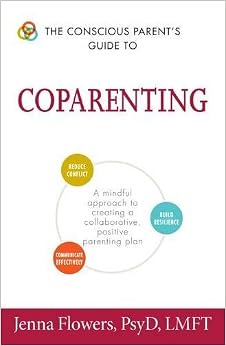
The Conscious Parent's Guide to Coparenting: A Mindful Approach to Creating a Collaborative, Positive Parenting Plan (The Conscious Parent's Guides)

The Conscious Parent's Guide to Coparenting: A Mindful Approach to Creating a Collaborative, Positive Parenting Plan (The Conscious Parent's Guides)


The Conscious Parent's Guide to Coparenting: A Mindful Approach to Creating a Collaborative, Positive Parenting Plan (The Conscious Parent's Guides)


Ebook The Conscious Parent's Guide to Coparenting: A Mindful Approach to Creating a Collaborative, Positive Parenting Plan (The Conscious Parent's Guides)

The Conscious Parent's Guide To Coparenting: A Mindful Approach To Creating A Collaborative, Positive Parenting Plan (The Conscious Parent's Guides). Let's read! We will typically locate out this sentence anywhere. When still being a youngster, mom made use of to buy us to always review, so did the teacher. Some e-books The Conscious Parent's Guide To Coparenting: A Mindful Approach To Creating A Collaborative, Positive Parenting Plan (The Conscious Parent's Guides) are fully read in a week and also we need the commitment to sustain reading The Conscious Parent's Guide To Coparenting: A Mindful Approach To Creating A Collaborative, Positive Parenting Plan (The Conscious Parent's Guides) Exactly what around now? Do you still like reading? Is reading simply for you which have obligation? Not! We right here supply you a new book entitled The Conscious Parent's Guide To Coparenting: A Mindful Approach To Creating A Collaborative, Positive Parenting Plan (The Conscious Parent's Guides) to read.

If you have actually learnt about this site, it will be better and also you have actually understood that guides are frequently in soft file forms. And also now, we will certainly invite you with our brand-new collection, The Conscious Parent's Guide To Coparenting: A Mindful Approach To Creating A Collaborative, Positive Parenting Plan (The Conscious Parent's Guides) This is our updated publication to offer in the list of this website book. You could take it as the recommendation for your task and also your daily task. There is no idea to come join us to find the tough publication. But here, you can discover it so very easy that it could make you feel pleased.

From the mix of expertise and activities, somebody can enhance their skill and also capacity. It will certainly lead them to live and also function much better. This is why, the pupils, workers, or even employers should have reading habit for books. Any book The Conscious Parent's Guide To Coparenting: A Mindful Approach To Creating A Collaborative, Positive Parenting Plan (The Conscious Parent's Guides) will certainly offer specific understanding to take all benefits. This is what this The Conscious Parent's Guide To Coparenting: A Mindful Approach To Creating A Collaborative, Positive Parenting Plan (The Conscious Parent's Guides) tells you. It will include even more knowledge of you to life and work better. The Conscious Parent's Guide To Coparenting: A Mindful Approach To Creating A Collaborative, Positive Parenting Plan (The Conscious Parent's Guides), Try it and confirm it.

After recognizing this quite simple means to read and get this The Conscious Parent's Guide To Coparenting: A Mindful Approach To Creating A Collaborative, Positive Parenting Plan (The Conscious Parent's Guides), why do not you tell to others regarding this way? You could tell others to see this site and go for looking them favourite publications The Conscious Parent's Guide To Coparenting: A Mindful Approach To Creating A Collaborative, Positive Parenting Plan (The Conscious Parent's Guides) As recognized, below are great deals of lists that provide several type of publications to collect. Simply prepare few time as well as net links to obtain the books. You could really appreciate the life by reading The Conscious Parent's Guide To Coparenting: A Mindful Approach To Creating A Collaborative, Positive Parenting Plan (The Conscious Parent's Guides) in a really easy fashion.

The Conscious Parent's Guide to Coparenting: A Mindful Approach to Creating a Collaborative, Positive Parenting Plan (The Conscious Parent's Guides)

About the Author

Jenna Flowers, PsyD, LMFT is a licensed marriage and family therapist. She is the codeveloper of Conscious Mothering, a class that teaches parents how to be more self-reflective and understand their children on deeper levels. In her practice, Dr. Flowers frequently gives talks on parenting, marriage, and anxiety. She lives in Newport Beach, CA.

Read more

Product details

Series: The Conscious Parent's Guides

Paperback: 240 pages

Publisher: Adams Media (June 1, 2016)

Language: English

ISBN-10: 9781440595196

ISBN-13: 978-1440595196

ASIN: 1440595194

Product Dimensions:

5.5 x 0.6 x 8.4 inches

Shipping Weight: 10.4 ounces (View shipping rates and policies)

Average Customer Review:

5.0 out of 5 stars

5 customer reviews

Amazon Best Sellers Rank:

#768,709 in Books (See Top 100 in Books)

Great book filled with useful advise and tips. My only suggestion is to person or group that over sees the The Conscious Parent's Guide to... Is, well, this would be an excellent place to have gender (role) based books (more useful that the current two guides to Raising Boys and another for Raising Girls) one book for Mom's and another for Dad. Just please make sure it is Flowers is writing both, she does an excellent job.PS I have noticed a directional focus change in The Conscious Parent Guide topics. May I humbly suggest, An Overview Book because right now it is sort of confusing.And rather than the current stroll down the whole gender path how about: Sensory Processing Disorder, OCD, Visual Proccessing Disorders, Depression, Bi-Polar, Tourette's, Conduct Disorders, Auditory Processing Disorders, dyslexia, dyscalculia, dysphasia. Or continue the awesome foundation in the co-parenting book, and cover Family Dynamics, and the different risk factors for multi-partnered fertility (half siblings), or my favorite idea Grandparents.It is the whole gender identity thing is a bit soon, especially with the totally different content in the Raising Boy and Raising Girls books.

I wish I had read this book twenty years ago! This co-parenting guide provides a solid framework for successfully navigating the tumultuous waters of co-parenting after divorce. Compassionately written, this practical book is based on sound psychological foundation. In addition to frequently recommending it to parents wanting the best for their children, I also recommend the book to therapists and other helping professionals who serve these families. It's a must read!

As a Certified Family Law Mediation Specialist, I found this book to be very insightful in a straightforward, practical, and easy to read manner. Dr. Flowers addresses many issues that I see couples face on a daily basis in my office. The book centers around three main themes: Reducing conflict between you, learning how to communicate effectively with each other, and building resilience - three components that are critical in having a strong and effective co-parenting relationship!

As a future marriage and family therapist, I highly recommend Dr. Flower’s book, The Conscious Parents Guide to Coparenting. It is a great resource for not only individuals who are going through the process of learning how to coparent, but also for anyone looking to expand their understanding of the importance of coparenting and how it can strengthen familial relationships even in the midst of transition. Dr. Flower’s is highly esteemed in her field in Orange County making her writing a must for anyone interested in the mental health field.

Lowering stress, mutual communication, the children's play time -- so much expert info here on parenting! I like how easy it is to read and absorb the info. Dr. Flowers has a terrific reputation as a Therapist in Newport Beach, CA. Here's what's key here: You can teach mutual respect but not without forgiveness. There are many more "keys" in this must have resource.

The Conscious Parent's Guide to Coparenting: A Mindful Approach to Creating a Collaborative, Positive Parenting Plan (The Conscious Parent's Guides) PDF
The Conscious Parent's Guide to Coparenting: A Mindful Approach to Creating a Collaborative, Positive Parenting Plan (The Conscious Parent's Guides) EPub
The Conscious Parent's Guide to Coparenting: A Mindful Approach to Creating a Collaborative, Positive Parenting Plan (The Conscious Parent's Guides) Doc
The Conscious Parent's Guide to Coparenting: A Mindful Approach to Creating a Collaborative, Positive Parenting Plan (The Conscious Parent's Guides) iBooks
The Conscious Parent's Guide to Coparenting: A Mindful Approach to Creating a Collaborative, Positive Parenting Plan (The Conscious Parent's Guides) rtf
The Conscious Parent's Guide to Coparenting: A Mindful Approach to Creating a Collaborative, Positive Parenting Plan (The Conscious Parent's Guides) Mobipocket
The Conscious Parent's Guide to Coparenting: A Mindful Approach to Creating a Collaborative, Positive Parenting Plan (The Conscious Parent's Guides) Kindle
The Conscious Parent's Guide to Coparenting: A Mindful Approach to Creating a Collaborative, Positive Parenting Plan (The Conscious Parent's Guides) PDF

The Conscious Parent's Guide to Coparenting: A Mindful Approach to Creating a Collaborative, Positive Parenting Plan (The Conscious Parent's Guides) PDF

The Conscious Parent's Guide to Coparenting: A Mindful Approach to Creating a Collaborative, Positive Parenting Plan (The Conscious Parent's Guides) PDF

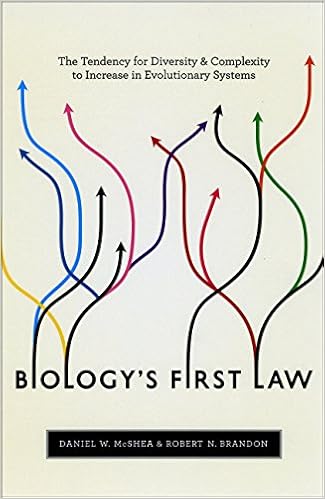
Ebook Biology's First Law: The Tendency for Diversity and Complexity to Increase in Evolutionary Systems

Biology's First Law: The Tendency For Diversity And Complexity To Increase In Evolutionary Systems. Bargaining with checking out routine is no demand. Checking out Biology's First Law: The Tendency For Diversity And Complexity To Increase In Evolutionary Systems is not type of something sold that you could take or otherwise. It is a point that will certainly alter your life to life much better. It is things that will certainly provide you several things worldwide and also this cosmos, in the real life and also below after. As just what will certainly be provided by this Biology's First Law: The Tendency For Diversity And Complexity To Increase In Evolutionary Systems, exactly how can you negotiate with things that has several advantages for you?

Biology's First Law: The Tendency for Diversity and Complexity to Increase in Evolutionary Systems

Biology's First Law: The Tendency for Diversity and Complexity to Increase in Evolutionary Systems


Biology's First Law: The Tendency for Diversity and Complexity to Increase in Evolutionary Systems


Ebook Biology's First Law: The Tendency for Diversity and Complexity to Increase in Evolutionary Systems

Exactly what do you believe to overcome your issue needed now? Reading a publication? Yes, we agree with you. Publication is just one of the real sources as well as enjoyment sources that will be always discovered. Several publication shops likewise provide and offer the collections publications. However the stores that sell guides from various other nations are rare. Hence, we are right here in order to help you. We have guide soft file web links not just from the country but likewise from outside.

Feeling challenging to obtain this best seller publication? Why? We think that best seller publication will always run out quickly. So, it's not to strange when you will certainly really feel tough to get it in guide store, or you have to bespeak Biology's First Law: The Tendency For Diversity And Complexity To Increase In Evolutionary Systems when you require it. Have enough time? Not everybody could wait for log moment to get guide. To conquer this trouble, we are here to provide you option. It is not really hard for us. We absolutely aid you by offering the listings of the brand-new best seller books in the world.

Never ever doubt with our deal, considering that we will certainly constantly offer exactly what you need. As such as this upgraded book Biology's First Law: The Tendency For Diversity And Complexity To Increase In Evolutionary Systems, you could not discover in the other area. But below, it's quite easy. Simply click as well as download, you could own the Biology's First Law: The Tendency For Diversity And Complexity To Increase In Evolutionary Systems When simplicity will alleviate your life, why should take the difficult one? You can acquire the soft documents of the book Biology's First Law: The Tendency For Diversity And Complexity To Increase In Evolutionary Systems here and be member of us. Besides this book Biology's First Law: The Tendency For Diversity And Complexity To Increase In Evolutionary Systems, you could also find hundreds lists of guides from many resources, collections, authors, as well as writers in all over the world.

In providing the details, we likewise reveal other book collections. We're aware that nowadays many individuals love reading a lot. So, discovering numerous the books below in this on-line publication is extremely easy. Searching and also surfing can be done wherever you are. It is the way you use the modern-day innovation as internet connection to link to this website. From this instance, we're really certain that everybody demands are covered in some books, the certain publications based on the subjects and requirements. As the Biology's First Law: The Tendency For Diversity And Complexity To Increase In Evolutionary Systems that is now preventative.

Biology's First Law: The Tendency for Diversity and Complexity to Increase in Evolutionary Systems

Review

“"Biology''s First Law" is an original and unusual book. A hybrid of theoretical biology and philosophy of science, it addresses both conceptual and empirical problems…a thought-provoking study.”—Samir Okasha, "Nature" --Samir Okasha "Nature """Biology''s First Law" is an original and unusual book. A hybrid of theoretical biology and philosophy of science, it addresses both conceptual and empirical problems . . . a thought-provoking study./i>--Samir Okasha "Nature "

Read more

About the Author

Daniel W. McShea is Associate Professor of Biology, with a secondary appointment in Philosophy, andRobert N. Brandon is Professor of Philosophy, with a secondary appointment in Biology, both at Duke University.

Read more

Product details

Paperback: 184 pages

Publisher: University of Chicago Press (July 15, 2010)

Language: English

ISBN-10: 0226562263

ISBN-13: 978-0226562261

Product Dimensions:

6 x 0.5 x 9 inches

Shipping Weight: 11.8 ounces (View shipping rates and policies)

Average Customer Review:

2.9 out of 5 stars

8 customer reviews

Amazon Best Sellers Rank:

#1,376,419 in Books (See Top 100 in Books)

When animals have nothing to do they go to sleep. But humans have a drive to know and understand everything. Attentive humans noticed fossils and asked where they came from. Very intelligent humans invented the theory that life evolved over a period of 3.5 billion years. Marshaling the evidence, rational humans judge the theory to be true. Humans then ask: What caused evolution?Creationists and advocates of intelligent design think that God did it. While there is evidence that God exists (free will, finite beings), there is little evidence supporting this theory. There is no evidence supporting the theory of natural selection. This theory only explains how giraffes got long necks, not how giraffes evolved from bacteria. The reason is that a giraffe is so much more complex than a bacterium and 3.5 billion years is only about a hundred thousand trillion seconds (17 zeros). Not enough is known about the innovations natural selection acts upon for humans to understand how evolution occurred in so short a time. Evolutionary biologists generally speak of "adaptive evolution" in connection with natural selection.Atheists, creationists, and advocates of intelligent design are responsible for the misinformation that natural selection is intended as an explanation for the complexity of life. The author of the following quote has a Ph.D. in linguistics, not biology. Pinker is Steve Pinker (Ph.D. in linguistics), and Bloom is Paul Bloom (Ph.D. in psychology). Notice that Charles Darwin (Ph.D. in biology) doesn't think natural selection explains the complexity of the human eye:"They [Pinker and Bloom] particularly emphasized that language is incredibly complex, as Chomsky had been saying for decades. Indeed, it was the enormous complexity of language that made is hard to imagine not merely how it had evolved but that it had evolved at all."But, continued Pinker and Bloom, complexity is not a problem for evolution. Consider the eye. The little organ is composed of many specialized parts, each delicately calibrated to perform its role in conjunction with the others. It includes the cornea,...Even Darwin said that it was hard to imagine how the eye could have evolved."And yet, he explained, it did evolve, and the only possible way is through natural selection--the inestimable back-and-forth of random genetic mutation with small effects...Over the eons, those small changes accreted and eventually resulted in the eye as we know it." (Christine Kenneally, The First Word: The Search for the Origins of Language pp. 59-60)McShae and Brandon state the limitations of natural selection explicitly:"The history of life presents three great sources of wonder. One is adaptation, the marvelous fit between organism and environment. The other two are diversity and complexity, the huge variety of living forms today and the enormous complexity of their internal structure. Natural selection explains adaptation. But what explains diversity and complexity?" (location 78, Kindle)The second bit of nonsense McShae and Brandon refute is the idea that evolution obeys the second law of thermodynamics. In November, 2008, the American Journal of Physics published an article "Entropy and evolution" that includes an absurd equation combining thermodynamics and probability theory to prove that evolution does NOT violate the second law of thermodynamics. The article was probably written in good faith because there are a lot of books and articles about evolution and the second law of thermodynamics.According to the second law of thermodynamics, a gas will fill up the entire container it is in because this is the most probable distribution of non-interacting molecules. In other words, nature goes from knowledge to lack of knowledge about the location of molecules, order to disorder, complexity to simplicity, or low entropy to high entropy. When shuffling a deck of playing cards the chance of the deck getting back into its original factory order is about one in 10, 000 vigintillion (67 zeros). I mention cards because physicists label the molecules in a gas No. 1, No. 2, etc. and a deck of playing cards comes automatically labeled. Notice that there are almost four times as many zeros in this number as in the time for evolution.In trying to understand evolution, biologists use as a model for a protein, not a deck of playing cards, but the English sonnet. A protein has four levels of complexity, but the primary structure has hundreds of amino acids and each amino acid has to be in exactly the right location for the protein to work. As there are 20 amino acids and 26 letters, biologists calculate how long it would take a computer to generate a sonnet by the random selection of letters. (Marc Kirschner and John Gerhart, The The Plausibility of Life: Resolving Darwin's Dilemma, pages 32).Kirschner and Gerhart only report a calculation simulating natural selection for a the phrase "to be or not to be." My guess is that nobody did the calculation for a sonnet because nobody cares. The primary structure of a protein doesn't even begin to describe the complexity of life. The dozens of proteins that make the flagellum of a bacterium rotate is a static kind of complexity, like the primary structure of a protein. By contrast, genetic engineering is the ability of cells to detect changes in the environment and create new proteins in response to the change. The ability of a fertilized animal egg to develop into a multicellular animal is another example of complexity. The instinctual behavior of animals and the knowledge of grammar that human infants are born with are other "sources of wonder," as the authors express it.The only connection between evolution and the second law of thermodynamics is that evolutionary biologists and physicists both perform probability calculations. The AJP article singles out for criticism the creationist Henry Morris for saying evolution violates the second law of thermodynamics. The article argues that the second law only applies to closed systems without mentioning the criterion that it only applies to non-interacting particles.The second law of thermodynamics does not apply to very large numbers of hydrogen atoms in outer space because the force of gravity causes stars to be formed from these atoms. A living organism is anything but a system of non-interacting particles. This is the real reason evolution does not violate the second law. With the goal of understanding evolution, the earth is a closed system. It is true that the sun bathes the earth with its energy. But energy from the sun generally heats things up and makes them more disordered, not less disordered.This is the way the McShae and Brandon explain that the complexity of life has nothing to do with the second law of thermodynamics:"Based on what we have said so far, some will be poised and ready to make a leap, from the notion of accumulation of accidents to the second law of thermodynamics.... We advise readers against this, for their own safety. We are concerned that on the other side of that leap there may be no firm footing. Indeed, there may be an abyss. First, we think the foundation of the ZFEL [zero-force evolutionary law] lies in probability theory, not in the second law or any other law of physics. And second, our notions of diversity and complexity differ fundamentally from entropy, in that entropy, unlike diversity and complexity is not a level-related concept. " (location 220 on Kindle)

I found this book to present an interesting argument, but I was continually bothered by one of their basic conclusions related to the implications of random variation among independent groups.The authors assert that among two different groups whose components vary randomly and independently from each other, the two groups will be become more and more distinct from each other, on average, over time. I don't believe statistical theory supports this assertion.For example, two piles of leaves (a favorite analogy of the authors) are 100 ft. apart from each other. Random wind patterns may distribute the leaves in each pile randomly and the variation in the leaf movements are independent between the two piles. Over time, the both piles will be obliterated but if the wind patterns are truly random than the leaves in the first pile will, on average, still be 100 ft. from the leaves in the second pile, on average.If the authors do not consider average distinctness of one group of leaves or cells from another to be measured in this way, they do not explicitly describe how they would propose to measure it differently. I believe the issue would remain nonetheless.

I. Brief ThoughtsThis book posits the "Zero-Force Evolutionary Law", or ZFEL (which the authors suggest pronouncing like "zeffle"). The book is not long, but it is dense, and the authors are what an old professor of mine would call "good philosophers" -- they tell you what they are doing as they do it. The lines of reasoning are easy to follow, and examples, objections, and distinctions are offered in due course to make sure readers keep the discussion well sorted in their minds. The ZFEL, briefly put, is a hierachical and probabilistic explanation for the widespread observation that organisms tend to diversify and become more complex over time. The authors argue the ZFEL is the best null hypothesis in biological situations, and they point to a change in how we formulate biological explanation. They discuss both relevant empirical and philosophical points in a wide-ranging but deceptively simple book.- - - - - - -II. Further CommentThe ZFEL law is argued to be the fundamental background condition in any biological situation. Considering, as Dobzhansky put it, that nothing in biology makes sense except in the light of evolution, it will come as no surprise that "biology's first law" is an evolutionary law. It may come as a somewhat greater surprise that the ZFEL is distinct from natural selection. The ZFEL, though, is posited in a strongly neo-Darwinian context, and the authors argue strenuously that the ZFEL complements the principle of natural selection.Here is how the authors articulate the ZFEL:"In any evolutionary system in which there is variation and heredity, there is a tendency for diversity and complexity to increase, one that is always present but may be opposed or augmented by natural selection, other forces, or constraints acting on diversity and complexity."The simplest example the authors use is the accumulation of variation on the pickets of a fence. As paint flakes off, lichen appears, etc., the variation is hereditary (retained through time), and so as time progresses the pickets become increasingly different. Importantly, We can say either that the population of pickets becomes more *diverse* or that the fence becomes more *complex*. Typically, we speak of complexity when examining "down" to a smaller scale, such as cellular machinery, whereas we speak of diversity when looking "up" to a wider scale, such as an ecosystem. Both, however, refer to the number of constituents of some entity -- both are hierarchical. And anyone who's ever seen (or made) a phylogeny should recognize that evolution is manifestly hierarchical.Thus the authors point to evidence for the ZFEL, arguing "[t]he ZFEL is supported by an enormous amount of evidence, at every temporal and physical scale, at every level of organization, across biology." They specify that "[t]wo of the most compelling pieces of evidence" are "the increase in phenotypic diversity over the history of life and the rise in genomic complexity marked by the divergence of pseudogenes." Thus the ZFEL is a formalization of widespread patterns we are all familiar with. The authors argue that the pattern of increasing diversity/complexity is so pervasive that it constitutes the background condition, the null hypothesis of biology.It is helpful to contrast the zero-force expectation of the ZFEL against the Newtonian zero-force expectation. The nature of inertia dictates that an unperturbed object maintains its trajectory -- that, absent some additional force, an entity at rest remains the same. The ZFEL says that we should expect an entity to be different (or differentiated) at some later time, as a null expectation, in the absence of any intervening forces.It is also helpful to contrast the ZFEL against a pair of well regarded biological mechanisms: diversifying selection and drift. Both are already recognized as agents that increase diversity/complexity in the biosphere. The ZFEL subsumes these mechanisms with an important hierachical and probabilistic notion of respective randomness. Here is how the authors explain their position:"Consider this. Take a snapshot of all of the people on a crowded city street corner at some moment in the middle of the day. Then find these same people 10 minutes later. Find them again 20 minutes later, and then 30 minutes later. With the passage of time, they will become increasingly dispersed, or in other words, the variance in their locations will increase. And this is true even if the trajectory of each person is the deterministic outcome of his or her plans for that afternoon. One is on her way to her office. Another is walking his dog. A third is going grocery shopping. And so on. To the extent those motivations and plans are different from and independent of each other, the individuals movements are random with respect to each other. And dispersion at the higher level - the greater variance in location of the group - is the expected outcome of randomness in the with-respect-to sense at the lower level. This is the principle underlying the ZFEL."The ZFEL turns on this kind of hierarchial, probabilistic thinking. Thus although the ZFEL is a formalization of conventional data, the novelty of the ZFEL is in interpreting biological causation as essentially probabilistic and hierachical. Now, to be sure, biology has long grappled with both hierarchy and probability. But, the traditional norm has been to treat both notions rather differently than the ZFEL suggests. Discerning the novelty in the ZFEL is tricky, because, as the authors note:"What we have offered here is a standard sort of scientific argument for a theoretical point of view. We have invoked the huge body of data represented by virtually everything we know about macroevolutionary divergence and argued that it best explained by the ZFEL. Further, we have argued that the standard explanations in the field are, implicitly, ZFEL explanations. So even though we are explicitly stating the ZFEL here for the first time, the data pre-exist and strongly support the ZFEL."So, what is the value of dwelling on the obvious like this? The novelty of the ZFEL is not that it predicts diversification/complexification -- this is already the intuition of everyone from oncologists to ecologists. The novelty is in the roles of probability and hierarchy in explanation.Probability is traditionally understood as a tool for verification (the "prob" in the word comes from the same root that gave us words like "prove" and "probity" and "proof"). In a complicated world, we can't expect even valid results to be perfectly self-evident, so probabiilty is used to reveal when research results are credible. McShea and Brandon, however, suggest that probability can become the logical basis of biological CAUSATION, like calculus did for classical mechanics. They are not precisely the first to suggest this, and point (for example) to another author's argument that probability is a sufficient explanatory tool for radio-decay.*Hierarchical scales of biological activity delineate the traditioanl subdisciplines in biology; for example, biochemistry, cell biology, and physiology. Because biologists recognize that different scales are truly different -- there are different types of data to collect and different processess to explain -- the practice is to confine investigation to a single level. Rather less emphasis, however, has been put on the relationship between levels. The ZFEL explicitly states that biological explanation can be INTER-scale, not just INTRA-scale. At a time when interdisciplinary work is coming into its own, the ZFEL might be a helpful guiding tool in what inter-scale relationships investigators could work toward.Somewhat more abstractly, the ZFEL challenges a person to try a kind of hierarchical thinking that is foreign and yet deeply gratifying to the intuition of anyone familiar with nature. One of the curious things about biota is that we can more fully distinguish two organisms that are more similar. That is, the more similar things are to each other, the more specific we can be about how they are different. If we want to compare toads to (other) frogs, we walk away feeling like we have said something directly relevant to what makes toads toads and frogs frogs. If we want to compare toads to porpoises, we will end up specifying a set of differences and similarities that differs substantially from the toad-frog set (e.g. how many heart chambers, rather than how water-permeable the skin). Comparing toads to sycamores will result in a still-different set of comparisons (e.g. the source of mechanical rigidity). McShea and Brandon recognize this situation in their explanation of how to paramaterize complexity/diversity -- by doing it ad hoc, with whatever characters could be useful for a given comparison -- and they make this situation explanatorily relevant in their formulation of the ZFEL. The slippery nature of inter-taxon comparison is manifestly a hierarchical phenomenon, and it is what makes it impossible to develop a single set of parameters that would describe all organisms fully without redundancy.**This brings us to the crucial difference between the ZFEL and the 2nd Law of Thermodynamics: entropy can be compared in identical units between any two entities. Colloquially speaking, entropy is everything getting messier, while the ZFEL is everything getting more complicated. As the ZFEL pushes things to become more different, the nature of their difference itself becomes more complicated. This is not the case for entropy. To be sure, the ZFEL complements, rather than contradicts, the law of entropy. McShea and Brandon point to a literature on the relationship between entropy and evolution, citing it as an important influence on their own thinking. For some time, physicists have distinguished dis/organization from entropy. Consider, for example, that before the universe segregated into galaxy clusters, with galaxies of varied structure, with stars having distinct layers, surrounded by distinctly composed planets arrayed in ordered orbits, the rather formless early universe had *lower entropy* than the *highly organized* universe we see now. For me, at least, this situation highlights the weakness of my intuition about what entropy really is. Entropy and organization actually increase together.If the basic expectation of the ZFEL -- increasing diversity/complexity through time -- is so overwhelmingly confirmed by experience as to be just the status quo recapitulated, the ZFEL's challenge to intuition and the reorientation of causal explanation are so subversive that they might discomfit even ZFEL enthusiasts. I suspect this is what Michael Foote had in mind saying the "ZFEL will be obvious to some, heretical to others" (see editorial review). But I would differ slightly from Foote, as I think it is precisely those who find the ZFEL self-evident and congruous with their former education who will grapple with its devious truth.* A bias toward sufficiency over necessity is heresy to many. I suspect Monod would smile.** Whether nucleotide sequence accomplishes this task is an interesting issue, but space limits.

Biology's First Law: The Tendency for Diversity and Complexity to Increase in Evolutionary Systems PDF
Biology's First Law: The Tendency for Diversity and Complexity to Increase in Evolutionary Systems EPub
Biology's First Law: The Tendency for Diversity and Complexity to Increase in Evolutionary Systems Doc
Biology's First Law: The Tendency for Diversity and Complexity to Increase in Evolutionary Systems iBooks
Biology's First Law: The Tendency for Diversity and Complexity to Increase in Evolutionary Systems rtf
Biology's First Law: The Tendency for Diversity and Complexity to Increase in Evolutionary Systems Mobipocket
Biology's First Law: The Tendency for Diversity and Complexity to Increase in Evolutionary Systems Kindle

Biology's First Law: The Tendency for Diversity and Complexity to Increase in Evolutionary Systems PDF

Biology's First Law: The Tendency for Diversity and Complexity to Increase in Evolutionary Systems PDF

Biology's First Law: The Tendency for Diversity and Complexity to Increase in Evolutionary Systems PDF

Sabtu, 31 Mei 2014

Download PDF , by Kwame Alexander

Currently, we involve use you the right catalogues of publication to open. , By Kwame Alexander is just one of the composition in this world in ideal to be checking out product. That's not just this book offers referral, yet additionally it will certainly show you the incredible benefits of reading a book. Creating your many minds is needed; in addition you are sort of people with terrific inquisitiveness. So, the book is really appropriate for you.

, by Kwame Alexander

, by Kwame Alexander


, by Kwame Alexander


Download PDF , by Kwame Alexander

, By Kwame Alexander. Accompany us to be participant right here. This is the site that will give you relieve of browsing book , By Kwame Alexander to review. This is not as the various other website; the books will be in the kinds of soft file. What benefits of you to be participant of this site? Get hundred compilations of book connect to download and install and also obtain always updated book each day. As one of guides we will present to you now is the , By Kwame Alexander that comes with an extremely pleased idea.

Nonetheless, this period also enable you to obtain the book from many sources. The off line book store might be an usual area to visit to obtain the book. But now, you can additionally locate it in the internet library. This site is one of the online library in which you could find your chosen one to read. Now, the presented , By Kwame Alexander is a publication that you can discover below. This book has the tendency to be guide that will certainly provide you brand-new inspirations.

Amounts of the book collections that we provide in the checklists in this sites are actually numerous. A lot of titles, from alternative subjects and also motifs are created by variations authors. Furthermore, they are likewise published from numerous authors on the planet. So, you could not only find , By Kwame Alexander in this website. Several many publications can be your forever good friends begin with currently.

Despite your history is it's offered for you, the supreme soft file publication of , By Kwame Alexander After getting the book from the link site that we offer below, you could after that wait into your gadget. Gizmo, laptop, computer system, and disks are offered to fit this file. It suggests that as soon as you take the book, you can utilize the soft declare some device. It's really enjoyable, right?

, by Kwame Alexander

Product details

File Size: 13024 KB

Print Length: 245 pages

Publisher: HMH Books for Young Readers; Reprint edition (March 18, 2014)

Publication Date: March 18, 2014

Sold by: Amazon Digital Services LLC

Language: English

ASIN: B00E78IBAC

Text-to-Speech:

Enabled

P.when("jQuery", "a-popover", "ready").execute(function ($, popover) {

var $ttsPopover = $('#ttsPop');

popover.create($ttsPopover, {

"closeButton": "false",

"position": "triggerBottom",

"width": "256",

"popoverLabel": "Text-to-Speech Popover",

"closeButtonLabel": "Text-to-Speech Close Popover",

"content": '

' + "Text-to-Speech is available for the Kindle Fire HDX, Kindle Fire HD, Kindle Fire, Kindle Touch, Kindle Keyboard, Kindle (2nd generation), Kindle DX, Amazon Echo, Amazon Tap, and Echo Dot." + '
'

});

});

X-Ray:

Enabled

P.when("jQuery", "a-popover", "ready").execute(function ($, popover) {

var $xrayPopover = $('#xrayPop_21422038428A11E9868C85AC049CD2F5');

popover.create($xrayPopover, {

"closeButton": "false",

"position": "triggerBottom",

"width": "256",

"popoverLabel": "X-Ray Popover ",

"closeButtonLabel": "X-Ray Close Popover",

"content": '

' + "X-Ray is available on touch screen Kindle E-readers, Kindle Fire 2nd Generation and later, Kindle for iOS, and the latest version of Kindle for Android." + '
',

});

});

Word Wise: Enabled

Lending: Not Enabled

Screen Reader:

Supported

P.when("jQuery", "a-popover", "ready").execute(function ($, popover) {

var $screenReaderPopover = $('#screenReaderPopover');

popover.create($screenReaderPopover, {

"position": "triggerBottom",

"width": "500",

"content": '

' + "The text of this e-book can be read by popular screen readers. Descriptive text for images (known as “ALT text”) can be read using the Kindle for PC app and on Fire OS devices if the publisher has included it. If this e-book contains other types of non-text content (for example, some charts and math equations), that content will not currently be read by screen readers. Learn more" + '
',

"popoverLabel": "The text of this e-book can be read by popular screen readers. Descriptive text for images (known as “ALT text”) can be read using the Kindle for PC app if the publisher has included it. If this e-book contains other types of non-text content (for example, some charts and math equations), that content will not currently be read by screen readers.",

"closeButtonLabel": "Screen Reader Close Popover"

});

});

Enhanced Typesetting:

Enabled

P.when("jQuery", "a-popover", "ready").execute(function ($, popover) {

var $typesettingPopover = $('#typesettingPopover');

popover.create($typesettingPopover, {

"position": "triggerBottom",

"width": "256",

"content": '

' + "Enhanced typesetting improvements offer faster reading with less eye strain and beautiful page layouts, even at larger font sizes. Learn More" + '
',

"popoverLabel": "Enhanced Typesetting Popover",

"closeButtonLabel": "Enhanced Typesetting Close Popover"

});

});

Amazon Best Sellers Rank:

#4,131 Paid in Kindle Store (See Top 100 Paid in Kindle Store)

I showed this book to my gifted 4th graders and the boys who previously showed very little interest in reading immediately loved this book. They loved the dust jacket, then they took that off and loved the texture of the book cover (which is like the skin of a basketball). Thank you, Kwame Alexander, for these hooks before they even opened the book. Then they loved that it was poetry (fewer words per page..."I'm on page 32!"), and they loved the first page - maybe the best first page ever written for a boy reader.These kids were immediately sucked into the story. They loved the dynamics between the twin brothers, and the confidence of the narrator. They loved the father's pride in his son and that the father's language and taste was cheesy and dated.I can't thank the author enough for writing something that sounds so real, so relevant, so current, for boys who want to recognize themselves and their families on the page. It's not easy for an adult to write authentically for children using current language and icons that appeal to children. The boys in my group didn't know all of the basketball stars in the book - I needed to tell them who Magic Johnson was, for example - but they are a bit younger than the intended audience.

The Crossover, a Newbery Medal winner, is unusual; it’s children’s lit in the form of poetry, yet with a definite story line. It’s about a junior high school kid, Josh (a/k/a Filthy) and his parents and twin brother, Jordan (J.B.). The book centers around basketball; the twins are basketball stars, and their father was an NBA-caliber player who played briefly in Italy. Their mother is a vice principal.I'm not the intended audience for this book -- I don't particularly like basketball, I'm well past school age (by a lot), and I'm not really all that fond of poetry -- so I had reason to suspect that I might not like this book. However, I'm an omnivorous reader, and appreciate good writing of all sorts, and by the end I found that I enjoyed it a lot. I do think it’s a rather strange choice for the Newbery, although it is very creative. So it’s a very different book, but the story itself is universal. I’m glad I read it.

I read another book, IA: B.O.S.S., by a talented author, John Darryl Winston, that had some basketball content and middle-grade boy friendships that I really enjoyed. Therefore, when I came across The Crossover, it intrigued me. The talented author Kwame Alexander did not disappoint. The book contains a tight plot that encompasses family, friendship, love, health, and more. Kwame accomplishes a difficult and ambitious masterpiece by telling a story in short rhythmic verses. Kwame also does a great job capturing the essence of brotherhood between twins, Josh and Jordan Bell, mingled with the complicated dynamics of being in junior high (Jordan falls in love with Sweet Tea, and Josh wants a sip.). This is a great book for junior high kids and older. It's an easy read with a touching story. I also love the difficult vocabulary words that are introduced throughout the book.

Kwame Alexander's THE CROSSOVER (2014) is not a stereotypical basketball story. Rather, it is a universal story with educated, black characters of growing up, of family, and of love told in narrative verse (poetry). Having said that, Alexander does tackle some contemporary issues of black life: of driving while black, of the consequences for black men who do not regulate their temper, of poor diet and not seeking medical treatment. At its core, though, the story is about the love between twin brothers who think they are drifting apart as they go through puberty and the role that basketball plays in healing them through their obstacles. THE CROSSOVER is an engaging, emotional read that is ideal for those who love poetry, basketball, or may be reluctant readers.

I admit that I initially got this book because of two factors: one is that the author is a Virginia resident and the second is that the Kindle price was incredibly cheap, something that was likely done because the book won a Newbery Award. It's not a particularly long novel, but it's short length works in its favor because this is an exceedingly powerful book.The entire work is told in verse and it's beautifully done, as Alexander takes full advantage of the format to craft visually lovely free verse that truly leaps off the page. It's a book that's very much meant to be viewed, although part of me is curious to listen to the audiobook so I can experience how the narrator interpreted various portions of the book. What ultimately works best here is that the characters are all believable and best of all, there are no "bad guys" here. Even though we're really only given the perspective of one of the two brothers, it will be very easy for readers of all ages to interpret how either brother is feeling at almost any given point of the book- an element that I'm sure is going to be the focus of many, many school lectures.I can easily see this book becoming a staple of multiple classrooms and for good reason. It's amazingly well crafted and even better- it's fiction that will appeal to any age and any gender. This book deals with a lot of difficult topics, from growing up to family issues to various different things that just about every child will deal with when they're young and I whole heartedly recommend that parents read this book as well and discuss it with their children and heck, maybe even make up a few verses for themselves.

As a former librarian, I wonder what books children and young adults will read and enjoy. As the mother of a 13-year-old, I wonder what books will pull him away from his computer games. I believe that The Crossover by Keane Alexander is such a book. It is full of action and contemporary references, as well as realistic family dynamics. The poetry filled the book with movement and song; it is almost as if it gave flesh to the book. I wish there were more books with male protagonists like this in this age group. I could not put this book down. I cannot wait to share it with my son.

, by Kwame Alexander PDF
, by Kwame Alexander EPub
, by Kwame Alexander Doc
, by Kwame Alexander iBooks
, by Kwame Alexander rtf
, by Kwame Alexander Mobipocket
, by Kwame Alexander Kindle

, by Kwame Alexander PDF

, by Kwame Alexander PDF

, by Kwame Alexander PDF

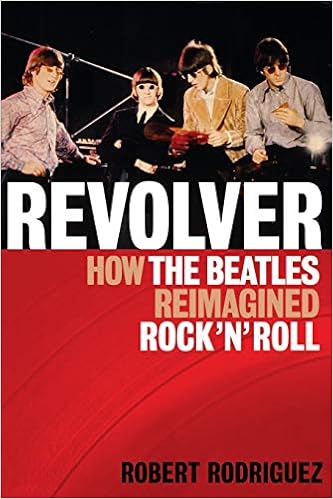
Ebook Revolver: How the Beatles Re-Imagined Rock 'n' Roll, by Robert Rodriguez

Do you still have no idea with this book? Why must Revolver: How The Beatles Re-Imagined Rock 'n' Roll, By Robert Rodriguez that becomes the inspiration? Everybody has different issue in the life. But, related to the valid educational as well as expertise, they will certainly have very same final thoughts, certainly based upon facts and study. And also currently, how the Revolver: How The Beatles Re-Imagined Rock 'n' Roll, By Robert Rodriguez will provide the discussion concerning exactly what realities to constantly be mind will certainly influent just how some people think as well as remember regarding that problem.

Revolver: How the Beatles Re-Imagined Rock 'n' Roll, by Robert Rodriguez

Revolver: How the Beatles Re-Imagined Rock 'n' Roll, by Robert Rodriguez


Revolver: How the Beatles Re-Imagined Rock 'n' Roll, by Robert Rodriguez


Ebook Revolver: How the Beatles Re-Imagined Rock 'n' Roll, by Robert Rodriguez

There are numerous publications that can be candidates to read in this current era. However, it might be difficult for you to check out as well as complete them simultaneously. To conquer this issue, you should choose the initial book and also make prepare for various other publications to review after completing. If you're so confused, we advise you to pick Revolver: How The Beatles Re-Imagined Rock 'n' Roll, By Robert Rodriguez as your reading resource.

A referred will be opted to get the specific ways of how you make the deal of the situation. As exactly what we refer, Revolver: How The Beatles Re-Imagined Rock 'n' Roll, By Robert Rodriguez has numerous objectives for you to select as one of the sources. First, this is really attached to your issue currently. This publication likewise supplies easy words to utter that you could absorb the information conveniently from that publication.

When you have this practice to do in daily, you can be abundant. Rich of experience, rich of expertise, lesson, as well as abundant of certified life can be gained effectively. So, never ever be uncertainty or perplexed with exactly what this Revolver: How The Beatles Re-Imagined Rock 'n' Roll, By Robert Rodriguez will provide to you. This most current book is again a really incredible book to check out by individuals like you. The content is so appropriate as well as matches to exactly what you require currently.

As well as currently, your opportunity is to obtain this publication asap. By seeing this web page, you could in the connect to go directly to the book. And also, get it to become one part of this most current book. To make certain, this publication is truly suggested for reading. Whether you are not followers of the author or the topic with this book, there is no mistake to read it. Revolver: How The Beatles Re-Imagined Rock 'n' Roll, By Robert Rodriguez will certainly be actually perfect to review now.

Revolver: How the Beatles Re-Imagined Rock 'n' Roll, by Robert Rodriguez

About the Author

Pop culture historian Robert Rodriguez is an acknowledged expert on all things Beatle.

Read more

Product details

Paperback: 282 pages

Publisher: Hal Leonard Corporation; Original edition (April 1, 2012)

Language: English

ISBN-10: 1617130095

ISBN-13: 978-1617130090

Product Dimensions:

6.2 x 0.7 x 9 inches

Shipping Weight: 1 pounds (View shipping rates and policies)

Average Customer Review:

4.5 out of 5 stars

66 customer reviews

Amazon Best Sellers Rank:

#362,462 in Books (See Top 100 in Books)

I have been a huge fan of the Beatles since I was a kid growing up in the 70s. My Dad had their albums and my Aunt had their singles which allowed me to discover their music on my own. I thought I had read every detail about the Beatles thanks to the plethora of books, articles, papers, interviews, documentaries, etc., about the Fab Four over the decades. So it was a pleasant surprise to discover new details about the revolutionary recording of Revolver. The depth of detail gave me a new appreciation for an album I thought knew so intimately. I have listened to Revolver repeatedly after reading this book as well as sought out cover versions of the songs off the album. I agree that the Revolver sessions saw the Beatles at the height of their power as a cohesive group. It wouldn't be long until the group dynamic would change and each member of the group operated more on their own as they grew older and had different interests. It was also fascinating to read just how involved George Martin was in working with the lads as equals in creating new sounds. You also had the open-minded and willing to push the boundaries assistance from a young Geoff Emerick. Everything came together during those studio sessions that allowed the Beatles to create the greatest album of all-time. I'm talking the British version and not the bastardized American one from Capitol. Rodriguez made the argument that Revolver was superior to Sgt. Pepper even though it was Sgt. Pepper that received all of the critical reviews and praise at that time. Rodriguez makes a persuasive case for Revolver being the most influential, experimental, revolutionary album ever created by the Beatles. After reading his book, I have been convinced he is correct in that assessment. Long Live Revolver and Long Live The Beatles!

Some fans of the Beatles prefer the group's early albums and some thought that the Fab Four were at their best shortly before they broke up, but most fans (and rock critics) think that they hit their apex in the middle of their career. Author Robert Rodriguez agrees, and tells the story of one of the band's most cherished albums in "Revolver: How The Beatles Reimagined Rock 'N' Roll."Rodriguez details where the Beatles were in their career in 1966, as they ceased live performances to permit themselves more time in the recording studio. The songwriting collaboration of John Lennon and Paul McCartney was still strong at that point, but Rodriguez also describes what some of the Beatles' contemporaries were doing in 1966 and how songwriters in top groups of the time influenced each other.This book takes the reader through the sequence of songs recorded for the album as well as for the "Paperback Writer/Rain" single, recalling how the album was produced and the creative innovations that the Beatles used to evolve from their earlier material. "Revolver" was released in August, but controversies that the group was facing at that time and other circumstances kept it from selling as many copies and getting all the acclaim that it should have, and Rodriguez mentions these factors when discussing the reception that the album received.Rodriguez closes by comparing "Revolver" to its successor, "Sgt. Pepper's Lonely Hearts Club Band," noting that the latter record had more friendly conditions for getting a favorable reception than did "Revolver." The author contrasts the two albums and makes a strong case for "Revolver" being the superior effort. 1966 was perhaps the best year in rock history, and there is a fascinating month-by-month timeline at the end of the book of the major events in rock that year. Anyone into the Beatles or Sixties music in general would find this book a great read.

This is a wonderfully insightful tale of the Beatles' remarkable and revolutionary album, REVOLVER. Robert Rodriquez claims this is the Beatles' greatest album. He says it's the last time the band was all working together. He also says that SERGEANT PEPPER'S, which many experts consider to be the Beatles best and most revolutionary album was merely a continuation of things they'd already done on REVOLVER. Also, REVOLVER was released in the aftermath of John Lennon's "we're bigger than Jesus" quote, which Rodriguez says hurt reviews of the album in the U.S.Rodriguez puts the album in its time and place, telling where the Beatles were in terms of their career and personal lives. He also gives the reader a sense of the cultural whirlwind of the sixties during which the album was created. And he examines the influence the album had on others such as Brian Wilson and the Byrds.Certainly REVOLVER was a great album, and this book has caused me to appreciate it even more. But RUBBER SOUL remains my favorite album by the Beatles. But I must confess, this is my favorite book on any Beatles' album. It's a great read that Beatle fans will just eat up.

Revolver: How the Beatles Re-Imagined Rock 'n' Roll, by Robert Rodriguez PDF
Revolver: How the Beatles Re-Imagined Rock 'n' Roll, by Robert Rodriguez EPub
Revolver: How the Beatles Re-Imagined Rock 'n' Roll, by Robert Rodriguez Doc
Revolver: How the Beatles Re-Imagined Rock 'n' Roll, by Robert Rodriguez iBooks
Revolver: How the Beatles Re-Imagined Rock 'n' Roll, by Robert Rodriguez rtf
Revolver: How the Beatles Re-Imagined Rock 'n' Roll, by Robert Rodriguez Mobipocket
Revolver: How the Beatles Re-Imagined Rock 'n' Roll, by Robert Rodriguez Kindle

Revolver: How the Beatles Re-Imagined Rock 'n' Roll, by Robert Rodriguez PDF

Revolver: How the Beatles Re-Imagined Rock 'n' Roll, by Robert Rodriguez PDF

Revolver: How the Beatles Re-Imagined Rock 'n' Roll, by Robert Rodriguez PDF

Kamis, 01 Mei 2014

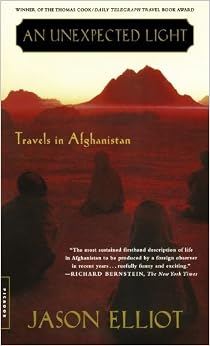
PDF Download An Unexpected Light: Travels in Afghanistan, by Jason Elliot

When An Unexpected Light: Travels In Afghanistan, By Jason Elliot is provided for you, it's clear that this publication is really suitable for you. The soft documents principle of this additionally brings convenience of exactly how you will delight in guide. Obviously, taking pleasure in the book can be just done by analysis. Checking out guides will lead you to always understand every word to create and every sentence to utter. Many individuals occasionally will certainly have various ways to utter their words. Nevertheless, from the title of this book, we make sure that you have known exactly what get out of the book.

An Unexpected Light: Travels in Afghanistan, by Jason Elliot

An Unexpected Light: Travels in Afghanistan, by Jason Elliot


An Unexpected Light: Travels in Afghanistan, by Jason Elliot


PDF Download An Unexpected Light: Travels in Afghanistan, by Jason Elliot

Surprisingly, An Unexpected Light: Travels In Afghanistan, By Jason Elliot that you actually await currently is coming. It's considerable to wait for the rep and advantageous books to check out. Every publication that is offered in better method and also utterance will certainly be expected by lots of people. Also you are a great visitor or otherwise, feeling to read this book will always appear when you locate it. Yet, when you really feel difficult to locate it as yours, what to do? Obtain to your buddies as well as have no idea when to repay it to her or him.

The benefits to consider checking out the publications An Unexpected Light: Travels In Afghanistan, By Jason Elliot are coming to boost your life quality. The life high quality will not simply about the amount of expertise you will get. Even you review the enjoyable or enjoyable e-books, it will certainly assist you to have enhancing life quality. Feeling fun will lead you to do something perfectly. Moreover, guide An Unexpected Light: Travels In Afghanistan, By Jason Elliot will certainly offer you the session to take as an excellent reason to do something. You could not be useless when reading this e-book An Unexpected Light: Travels In Afghanistan, By Jason Elliot

Don't bother! Now, in this contemporary era, you could obtain the books from several resources. No have to go to guide shops as well as walking around the city, you could find publication. Here is the web site that comes with all superb books to collect. You can get it in the soft data and use it to read. Of course, your tab and also computer system ends up being great gadget to save the book. An Unexpected Light: Travels In Afghanistan, By Jason Elliot is the very best referral to accompany you in this time. It will aid you going along with the free time while holidays.

ah, also you don't get the most effective perfections from reading this book; a minimum of you have actually improved your life and also efficiency. It is very needed to make your life much better. This is why, why don't you attempt to get this book and also review it to fulfil your free time? Are you interested? Juts choice currently this An Unexpected Light: Travels In Afghanistan, By Jason Elliot in the download link that we provide. Do not wait on more moment, the opportunity currently and also reserved your time to select this. You can truly utilize the soft data of this book effectively.

An Unexpected Light: Travels in Afghanistan, by Jason Elliot

From The New Yorker

As a nineteen-year-old on holiday from his native England, Elliot crossed illegally into Soviet-occupied Afghanistan and spent weeks with the mujahideen in the mountains near Kabul. Ten years later, with the Taliban gaining strength, he returned to the country as a journalist, his cowboy streak only slightly tempered by age. What saves this book from being just a swashbuckling travelogue is Elliot's far-reaching knowledge of Afghan history and his willingness to mock himself. After begging the Afghan fighters to take him on a military operation, he finds himself crouched in a cornfield and suddenly homesick: "I knew then that I lacked the qualities necessary for guerrilla warfare." Copyright © 2005 The New Yorker

Read more

Review

“The most sustained firsthand description of life in Afghanistan to be produced by a foreign observer in recent years . . . exciting.” ―Richard Bernstein, The New York Times“A work of substance and style, witty and moving by turns, never less than wholly passionate . . . What raises the book to the level of a classic is its intensely personal meditation on the magic of unplanned adventure, of the pain and pleasure of pushing into the unknown.” ―The Times (London)“The surprise of the year: a lyrical, unrestrained and enthralling account of a journey into Afghanistan . . . I loved this book.” ―Daily Telegraph“This extraordinary debut is an account of Elliot's two visits to Afghanistan. The first occurred when he joined the mujaheddin circa 1979 and was smuggled into Soviet-occupied Afghanistan; the second happened nearly ten years later, when he returned to the still war-torn land. The skirmishes that Elliot painstakingly describes here took place between the Taliban and the government of Gen. Ahmad Shah Massoud in Kabul. Today, the Taliban are in power, but Elliot's sympathies clearly lie with Massoud. Although he thought long and hard before abandoning his plan to travel to Hazara territory, where 'not a chicken could cross that pass without being fired on,' Elliot traveled widely in the hinterland, visiting Faizabad in the north and Herat in the west. The result is some of the finest travel writing in recent years. With its luminous descriptions of the people, the landscape (even when pockmarked by landmines), and Sufism, this book has all the hallmarks of a classic, and it puts Elliot in the same league as Robert Byron and Bruce Chatwin.” ―Library Journal“An Unexpected Light is often unexpectedly funny and constantly perceptive, but it is also profound.” ―Jason Goodwin, The New York Times Book Review“Elliot is an enthralling writer with a great gift for evoking places, people and atmosphere, from the pastoral calm of a fertile valley to the terrifying sights and sounds of war.” ―Merle Rubin, The Los Angeles Times“Lyrical . . . alluring . . . a poignant remembrance, hued in the mixed reds of war and sunset, that comes close to a place that has already changed beyond imagination.” ―Paula Newberg, San Francisco Chronicle Book Review“Humorous, honest and wry . . . [Elliot's] literary talents are exceptional. His sonorous prose moves forward with the purposeful grace of a river.” ―Publishers Weekly (starred)“An Unexpected Light is an unexpected gift . . . Elliot's account is vivid and should broaden the reader's comprehension of an often misunderstood country.” ―Jonathan Shipley, Columbus Dispatch“The author's impressive knowledge of Afghanistan's history, his seemingly boundless affection for its people, his understanding and respect for their culture and religion, and his flair for the language make this more than a casual travelogue. It is a plaintive love song whose discordant notes are provided by daily encounters with violence, hardship, and poverty.” ―Kirkus Reviews“An Unexpected Light thoughtfully lays out new and overlooked information that policy-makers in the U.S. and the West as a whole need when trying to decide what may work.” ―Robert A. Lincoln, Richmond-Times Dispatch“I am sure this book will soon be among the classics of travel.” ―Doris Lessing“An astonishing debut: one of the most remarkable travel books this decade.” ―Willam Dalrymple

Read more

See all Editorial Reviews

Product details

Paperback: 473 pages

Publisher: Picador USA (October 2001)

Language: English

ISBN-10: 0312288468

ISBN-13: 978-0312288464

Product Dimensions:

6 x 1.3 x 8.4 inches

Shipping Weight: 1 pounds (View shipping rates and policies)

Average Customer Review:

4.4 out of 5 stars

70 customer reviews

Amazon Best Sellers Rank:

#3,182,454 in Books (See Top 100 in Books)

I purchased this book after having read it at my local library because it has to be on my Top 25 list of favorite books of all time. Mr. Elliot lived and travelled in Afghanistan not as a journalist or tourist, but as a human being drawn to the area and its people. This was post-Soviet time and pre-American time, and probably many of the people and places he visited have changed irrevocably. What comes through is his intense willingness to meet people on their terms, without judgement or agenda, and what results is a deep love for the place and people of the land. It makes it doubly sad to know the corruption and continual war leaves so few people with any viable options for survival, let alone a good life--but I for one am very grateful and appreciative of this book and the attitude of its author towards a place and people I can only respect and admire the more for his sharing of his experience. The prose can be very lyrical and at times almost numinous, because he is being touched so by the deeper spirit of this land. Beautifully written with great respect and almost a reverence for the best of what is Afghanistan (hint: it's NOT Karzai). To me, delving into the nature of the place and people, I see that it is utterly fruitless for any other nation to occupy militarily and attempt to "win" any kind of war here. It will never happen, but I don't have another solution either. There is so much we can't understand about a foreign country, especially one with such a long history, but Afghanistan's people deserve peace and prosperity, and I wish it for them, somehow.

This book is more than a travel book. It's an opportunity for the reader to enjoy, know and appreciate the country and people of Afghanistan in the years during and just after the Soviet occupation post 1998. It's more than that too. It's a beautifully written and thoughtful book which is a stand-alone example of literature at its contemporary best. Elliott made at least two trips into Afghanistan as an independent journalist in the 1990 and in this book he chronicles the magnificence of the landscape, the quality of the Afghans, cut off and on their own and the warm and the hospitable nature of their customs. But don't cross them1 It was a pleasure to read, my only caveat being that Elliott used a map with names and places which don't appear on my National Geographic Atlas (you'll want to read it with a magnifying glass and a good atlas at hand). As travel literature goes it can't be beat!

Of the currently posted reviews, it is interesting that they either rate this book at the top or at the bottom of the rating scale. This is a sign that the book elicits much more comment on the reviewer's state of mind than on the book itself. My review will be no different.While I second those who extoll the book's poetry and its vivid portrayal of the Afghan land and culture, to me the real value of the book lies in its deepest appeal to the conscience (or lack of conscience) in the reader. Mr. Elliot's report is unique in that it covers two or three visits that he undertook that span the time during and after the Soviet war, just prior to Taleban occupation of Kabul and the roughly 90% of Afghanistan that it occupies today.During this time, under extremely difficult circumstances, Mr. Elliot had access to people and places that would shortly be cut off and, in many cases, destroyed during the ensuing Taleban onslaught. The result, both of the circumstances and Mr. Elliot's reporting on them, is a tale filled with longing--a longing for some of what is, much of what was and has been lost, and what may never be recovered, an innocence and deeply human sympathy ravaged by the cynicism of the world.Afghanistan was never an easy place to live, but it was long a place where humanity reigned supreme in the daily lives of common people. Some have called it the height of civilization, low-tech though it was. It had long been the seat of a kind of basic (and advanced) hospitality that has been all but lost, though much imitated, in much of the rest of the world. Elliot's deep love and intimate knowledge of these people and the remaining remnants of their culture informs every page of his vivid account.In the end, he leaves those of us with the conscience to respond with a deep sense of loss, yet with a vivid picture of hope for the future of our common human destiny. Yes, he makes us want to visit what was once Afghanistan, the Land of the Free. But even more, he makes us accutely aware of the Jewel that has been lost and that we must all find again to restore the vital center of our own particular human culture where we happen to live, among the common people of our daily lives.

An Unexpected Light: Travels in Afghanistan, by Jason Elliot PDF
An Unexpected Light: Travels in Afghanistan, by Jason Elliot EPub
An Unexpected Light: Travels in Afghanistan, by Jason Elliot Doc
An Unexpected Light: Travels in Afghanistan, by Jason Elliot iBooks
An Unexpected Light: Travels in Afghanistan, by Jason Elliot rtf
An Unexpected Light: Travels in Afghanistan, by Jason Elliot Mobipocket
An Unexpected Light: Travels in Afghanistan, by Jason Elliot Kindle

An Unexpected Light: Travels in Afghanistan, by Jason Elliot PDF

An Unexpected Light: Travels in Afghanistan, by Jason Elliot PDF

An Unexpected Light: Travels in Afghanistan, by Jason Elliot PDF

Jumat, 25 April 2014

Download Lonely Planet Iran (Travel Guide), by Lonely Planet

Reviewing is the best thing to do to fulfil the moment. Yeah, checking out will certainly constantly bring benefits. In addition, when you can recognize just what guide to check out, it's really well prepared. When you can review the book finished, you can obtain completed information that the author utters. In this instance, this book always offers good things. Lonely Planet Iran (Travel Guide), By Lonely Planet obviously will be so important to accompany you in your free time. Also it is just couple of web pages; you can review it by the times without forgetting just what you have actually checked out.

Lonely Planet Iran (Travel Guide), by Lonely Planet

Lonely Planet Iran (Travel Guide), by Lonely Planet


Lonely Planet Iran (Travel Guide), by Lonely Planet


Download Lonely Planet Iran (Travel Guide), by Lonely Planet

Find out more and also get great! That's just what the book qualified Lonely Planet Iran (Travel Guide), By Lonely Planet will certainly give for every viewers to read this book. This is an online book provided in this website. Also this publication comes to be a choice of a person to check out, numerous on the planet also loves it a lot. As just what we talk, when you learn more every page of this publication, just what you will get is something fantastic.

This is why we advise you to constantly visit this resource when you require such book Lonely Planet Iran (Travel Guide), By Lonely Planet, every book. By online, you could not getting guide store in your city. By this on-line library, you could discover guide that you actually intend to read after for long time. This Lonely Planet Iran (Travel Guide), By Lonely Planet, as one of the suggested readings, oftens be in soft data, as all of book collections here. So, you may also not await few days later on to get and review guide Lonely Planet Iran (Travel Guide), By Lonely Planet.

Guide can be organized to have such ideas that may make different things to keep in mind. One is that good writer always offer the motivating passage, great lesson, and excellent content. And also exactly what to give in Lonely Planet Iran (Travel Guide), By Lonely Planet is more than it. You could specify just how this publication will certainly obtain and also fulfill your readiness regarding this related topic. This is the method just how this book will certainly affect people to enjoy it a lot. After finding the reasons, you will certainly love an increasing number of concerning this book and writer.

Beginning to read this publication could begin your opportunity in doing this life far better. It will certainly make you count on have even more times or more spare times in analysis. Setting aside few times in a day just for analysis can be done as one of the initiatives for you to finish your tasks. When you will finish the evening prior to resting, Lonely Planet Iran (Travel Guide), By Lonely Planet is additionally a good idea to accompany you.

Lonely Planet Iran (Travel Guide), by Lonely Planet

Product details

Series: Travel Guide

Paperback: 384 pages

Publisher: Lonely Planet; 7 edition (September 19, 2017)

Language: English

ISBN-10: 9781786575418

ISBN-13: 978-1786575418

ASIN: 1786575418

Product Dimensions:

5 x 0.8 x 7.8 inches

Shipping Weight: 14.1 ounces (View shipping rates and policies)

Average Customer Review:

4.1 out of 5 stars

5 customer reviews

Amazon Best Sellers Rank:

#173,486 in Books (See Top 100 in Books)

Very up to date. I was in Iran in September 2017 and this guide's information was spot on.

good comprehensive manual

informative

As expected. Thank you

I would have given this book a higher rating if the author would have stuck to the subject, without wasting space on distracting liberal rhetoric and Trump bashing. I was looking for a travel book, not an essay on leftist politics.That said, there is some good stuff, where the author sticks to the subject. His regional descriptions and profiles of Iranian attractions are worthwhile. Just try to maintain perspective, and be​ aware that the author has an agenda other than providing useful information.

Lonely Planet Iran (Travel Guide), by Lonely Planet PDF
Lonely Planet Iran (Travel Guide), by Lonely Planet EPub
Lonely Planet Iran (Travel Guide), by Lonely Planet Doc
Lonely Planet Iran (Travel Guide), by Lonely Planet iBooks
Lonely Planet Iran (Travel Guide), by Lonely Planet rtf
Lonely Planet Iran (Travel Guide), by Lonely Planet Mobipocket
Lonely Planet Iran (Travel Guide), by Lonely Planet Kindle

Lonely Planet Iran (Travel Guide), by Lonely Planet PDF

Lonely Planet Iran (Travel Guide), by Lonely Planet PDF

Lonely Planet Iran (Travel Guide), by Lonely Planet PDF

Minggu, 06 April 2014

PDF Ebook Diabetic Cookbook: Easy, Healthy, and Delicious Recipes for a Diabetes Diet, by Shasta Press

Complying with the great routine will certainly reveal the great practice, as well. When having a great friend that has analysis practice, it is required for you to have that such practice. Well, also reading is actually not your design, why don't you try it once? To attract you to enjoy analysis, we will provide Diabetic Cookbook: Easy, Healthy, And Delicious Recipes For A Diabetes Diet, By Shasta Press now. Here this book tends to be one of the most referred publication that many people review it.

Diabetic Cookbook: Easy, Healthy, and Delicious Recipes for a Diabetes Diet, by Shasta Press

Diabetic Cookbook: Easy, Healthy, and Delicious Recipes for a Diabetes Diet, by Shasta Press


Diabetic Cookbook: Easy, Healthy, and Delicious Recipes for a Diabetes Diet, by Shasta Press


PDF Ebook Diabetic Cookbook: Easy, Healthy, and Delicious Recipes for a Diabetes Diet, by Shasta Press

Welcome once more, we always welcome the visitor to be in this web site. Are you the novice to be visitor? Don't bother. This website is actually available and also appropriate for everybody, Furthermore, the person that actually requires ideas and resources. By this problem, we always make updates to get everything brand-new. The books that we gather and also offer in the lists are originating from many sources inside and also beyond this nation. So, never be uncertainty!

That's a very common condition. To conquer this consists of, just what should do? Checking out a book? Undoubtedly? Why not? Publication is just one of the resources that lots of people depend on of it. Also it will certainly depend on the book kind and also title, or the writer; publications always have positive ideas and also minds. Diabetic Cookbook: Easy, Healthy, And Delicious Recipes For A Diabetes Diet, By Shasta Press is among the options for you to make you looking forward for your life. As recognized, reading will certainly lead you for a much better means. The way that you take obviously will be analogously with your instance.

You can obtain the book by visiting to the web link page of the book. It will certainly not be recognized when you don't download the application. And then, you could keep it to the device. You know, as the created and advanced technology in these recent years, the activities and all points can be done by using or making use of the innovation. This is as just what to do to obtain Diabetic Cookbook: Easy, Healthy, And Delicious Recipes For A Diabetes Diet, By Shasta Press in the soft file. You have to connect to the net as a typical point today.

And also the reasons that you ought to pick this suggested book is that it's composed by a preferred author on the planet. You may not have the ability to get this publication conveniently; this is why we offer you right here to relieve. Being very easy to obtain the book to read really becomes the first step to finish. Sometimes, you will certainly encounter difficulties in locating the Diabetic Cookbook: Easy, Healthy, And Delicious Recipes For A Diabetes Diet, By Shasta Press outside. Yet right here, you will not encounter that trouble.

Diabetic Cookbook: Easy, Healthy, and Delicious Recipes for a Diabetes Diet, by Shasta Press

Product details

Paperback: 258 pages

Publisher: Shasta Press (November 10, 2013)

Language: English

ISBN-10: 1623152372

ISBN-13: 978-1623152376

Product Dimensions:

6 x 0.6 x 9 inches

Shipping Weight: 1 pounds (View shipping rates and policies)

Average Customer Review:

4.4 out of 5 stars

72 customer reviews

Amazon Best Sellers Rank:

#68,683 in Books (See Top 100 in Books)

Told to watch my sugar, I decided to start learning about better ways to cook to minimize my risks and I came across this book. Oh my goodness. It was like going into a grocery store hungry, I was drooling before I was ½ way through the recipes.Half of the recipes are ones we all grew-up with just adapted, like the Ambrosia Salad made with can milk for whipping cream (which I didn’t know you could do) and lots of natural ingredients. Plus recipes for chilis, soups, stews and even sloppy joes. But the other ½ are recipes from all around the world that I am dying to try, like the Italian arancini (baked and breaded cheesy risotto stuffed rice balls) the AB&J French Toast (with homemade almond butter and bananas stuffed between whole-wheat bread layers and then dipped and cooked) and the Thai Red curry noodle soup.The recipes seem to center on using whole-wheat, brown rice, non and low fat ingredients, and sugar alternatives. (There is even a sweetener equivalent chart in the back of the book.) But the recipes also use a lot of flavor-adding ingredients like white wine, more spices, orange zest, fruits and nuts, etc. I have a feeling this book will be on my kitchen counter for a while!

It can be tricky to eat healthier. One major problem is feeling deprived. This cookbook offers over 100 recipes including many favorite dishes. There are 10 quick and easy ways for handling diabetes better. They include: watching portion sizes, exercise reducing sodium intake, quitting smoking, moderate drinking, and low carbs. These tips are also good advice for those without diabetes. The following is a partial list of the recipes featured. For breakfast, enjoy pancakes, waffles, French toast, and even Cheesy Grits. There's also recipes for syrup, whipped crème, and applesauce. Small bites include: miniature lobster rolls, sliders, buffalo wings, pigs in a blanket, and Swedish meatballs. Snackers might like baked potato chips with French dip, Garlic Hummus, or Perfect Parmesan Popcorn. Salad lovers will find recipes for Cobb, Caesar, Spinach, or Fruit. Those craving a sandwich can try Monte Cristo, Tuna Sloppy Joe, or Shrimp Po' Boy. Soup fans will savor Cream of Tomato, Mushroom, Chicken Noodle, Hearty Beef Stew, or Turkey Chili with Cinnamon and Cocoa. Vegetable side dishes include: Sour Cream Mashed Potatoes, Green Bean Casserole, Succotash, and Glazed Carrots. Vegetable entree's include: Portobello Mushrooms, Vegetable Coconut Curry, and Southwest Stuffed Bell Peppers. Enjoy pasta dishes like Macaroni and Cheese, Linguine with Red Calm Sauce, and Tuna Noodle Casserole. There are also seafood and poultry dishes, like Roast Chicken and Almond-Roasted Salmon. Enjoy meat dishes like Beef Stroganoff, Slow Cooker Venison Roast, and IndonesianPork Tenderloin. Finally, savor desserts like Coconut Pie, Strawberry Shortcake, Sugar Cookies, and Dark Chocolate Sherbet. Each recipe features preparation and cooking times. Many can be made in less than 30 minutes. But some will take longer. The breakfast dishes would probably be best for weekends and holidays. A burrito is called a good breakfast on the run. Yet it'd require lots of napkins due to all the ingredients used. Pasta dishes will need extra time. A few require longer time for marinating and refrigeration. There's also a section on properly using a mandoline for cutting homemade chips. Most of the ingredients are easily accessible. Others have substitutes listed just in case. Not surprisingly, several recipes use artificial sweeteners. There is a conversion table at the end of the book. Greek yogurt and kosher salt are among the ingredients that appear regularly in these recipes. Some recipes call for using parchment paper. The digital version needs some work. How come the ingredients are in lighter print? This makes them harder to read. Switching to larger print helps. But the nutritional information is in 2 columns. This causes some problems. It's not entirely readable in larger print. Most items are measured in grams. But sodium is measured in milligrams. That makes the amount look higher. The recipes in this cookbook will help make eating healthier a whole lot easier. Feeling deprived is harder when still enjoying favorite dishes. Some will also make some new favorites. Here's to happy healthy eating!

The principle of this book is that people with diabetes should be able to enjoy the food they love, but created with healthful ingredients with recipes that are simple to follow, taste familiar and are flavorful while using nutritious, good quality, fresh ingredients. In other words, one can be diabetic but live better and not feel deprived. The complicated subject of how to manage your blood sugar properly is simplified with easy-to-understand guidelines that everyone, not just diabetics, would benefit from following. The book presents information and recipes, and I noticed that many tempting recipes are gluten free, using other grains, including hors d’oeuvres and healthy desserts. The Diabetic Cookbook also includes cooking techniques, explains some interesting kitchen equipment, and offers steps for taking control of your diabetes. My grandfather probably would have lived another 30 years or more if he’d eaten from this diabetes cooking “handbook.” I can’t wait to try the Baked Tortilla Chips with Sweet and Spicy Fruit Salsa. The Mushroom Soup recipe is offered with almond milk, which is great as I try not to eat much dairy.

My mother is diabetic so when I purchased this book, I read it substantially with a skeptical appreciation. This is a very good introductory recipe book. It has a lot of excellent recipes that are not too hard to follow. However, I felt that two points of the book were misleading: First, that under the sugar substitutes information, the book doesn't include any potential warnings for most sugar substitutes. For instance, Splenda might cause cancer. Second, the book doesn't even briefly explain anything about organic versus all-natural or non-organic foods. From a strictly diabetic health POV, organic foods, with no processing, take longer to digest and so aid with glucose level balance. And lastly, from a purely formatting view, I have a Kindle Paperwhite and the ingredient lists were hard to read. They came off as a light gray color. All in all though, I bookmarked a lot of recipes to try later. Great must-have book for anyone, not just diabetics!

Diabetic Cookbook: Easy, Healthy, and Delicious Recipes for a Diabetes Diet, by Shasta Press PDF
Diabetic Cookbook: Easy, Healthy, and Delicious Recipes for a Diabetes Diet, by Shasta Press EPub
Diabetic Cookbook: Easy, Healthy, and Delicious Recipes for a Diabetes Diet, by Shasta Press Doc
Diabetic Cookbook: Easy, Healthy, and Delicious Recipes for a Diabetes Diet, by Shasta Press iBooks
Diabetic Cookbook: Easy, Healthy, and Delicious Recipes for a Diabetes Diet, by Shasta Press rtf
Diabetic Cookbook: Easy, Healthy, and Delicious Recipes for a Diabetes Diet, by Shasta Press Mobipocket
Diabetic Cookbook: Easy, Healthy, and Delicious Recipes for a Diabetes Diet, by Shasta Press Kindle

Diabetic Cookbook: Easy, Healthy, and Delicious Recipes for a Diabetes Diet, by Shasta Press PDF

Diabetic Cookbook: Easy, Healthy, and Delicious Recipes for a Diabetes Diet, by Shasta Press PDF

Diabetic Cookbook: Easy, Healthy, and Delicious Recipes for a Diabetes Diet, by Shasta Press PDF

Categories

Unordered List

Sample Text

Blog Archive

Popular Posts

Recent Posts

Text Widget